 A1 Garage Door's Repair Lancaster County
Garage Door Closes Then Opens Back Up in Lancaster, PA
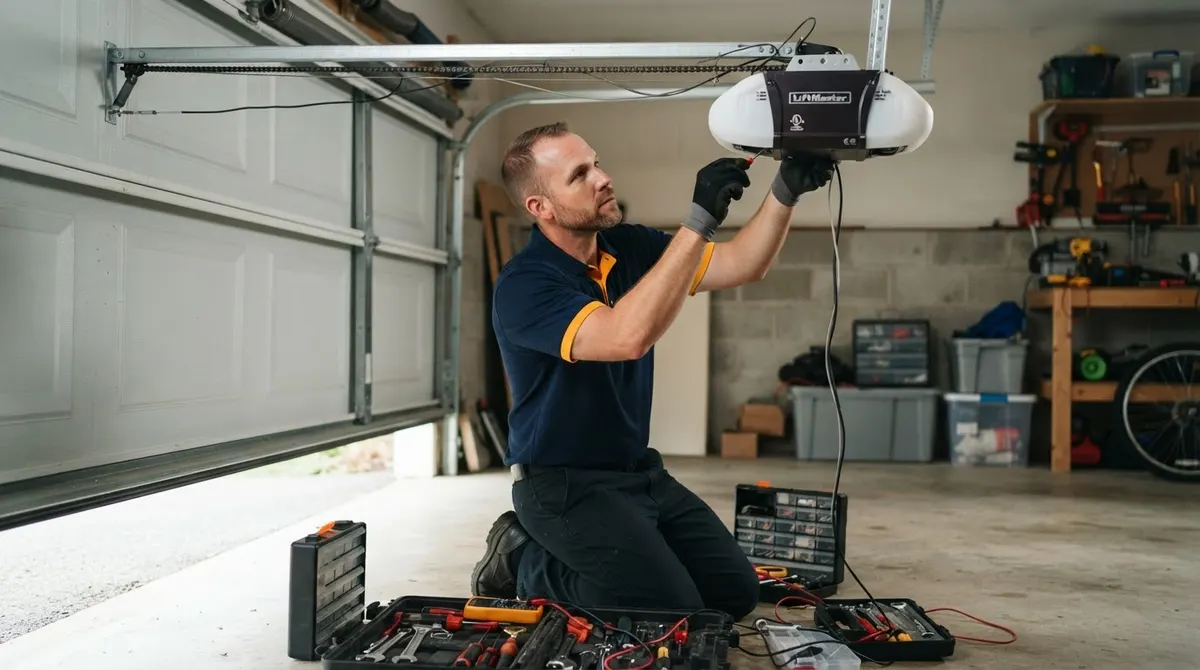
When a garage door in Lancaster closes partway or fully, then immediately reverses and opens back up, it typically indicates that the opener's safety mechanisms or limit settings have been triggered. This behavior is a common issue for homeowners across Lancaster County, from the older rowhomes in Cabbage Hill to the larger properties in School Lane Hills, and often points to a few specific problems that can be diagnosed and repaired by a qualified technician.
Why This Happens
A garage door that closes then reverses is engaging one of its primary safety features, designed to prevent the door from crushing an object or person. This behavior is not random; it's a direct response from the opener's system. In homes throughout Lancaster, including those near Franklin & Marshall College or in the Grandview Heights area, this issue can arise from several distinct causes. The opener interprets an obstruction or an improper resistance level during the closing cycle, prompting the reversal. This protective action is crucial for safety but can be inconvenient when it prevents the door from securing a garage, leaving vehicles exposed or delaying the morning commute from a home near US Route 30. The system's reaction can be due to incorrect force settings, misaligned or obstructed safety sensors, or mechanical issues within the door's track and hardware. Understanding the specific trigger is the first step in resolving the problem effectively. For a professional assessment in Lancaster, garage door repair services typically start with a minimum charge of $300 to diagnose such complex issues.
Adjusting the Close-Force Limit
<ol><li><strong>Locate the Force Adjustment Screws:</strong> On most garage door openers, including models common in Lancaster homes, two adjustment screws or knobs control the 'up' force and 'down' force. These are usually labeled and located on the back or side panel of the opener motor unit, which might be mounted to the ceiling in garages across neighborhoods like Rossmere or East Side. Consult the owner's manual for precise locations and identifiers for your specific opener model.</li><li><strong>Identify the Down-Force Setting:</strong> One screw controls the force exerted when the door closes. If this setting is too high, the door might hit the floor and 'think' it's hitting an obstruction, causing it to reverse. If it's too low, the door might not fully close or could reverse prematurely if it encounters minor resistance, such as a slight imperfection in the concrete driveway common in older parts of SoWe.</li><li><strong>Make Small Adjustments:</strong> Turn the 'down-force' screw a quarter turn clockwise to increase the force, or counter-clockwise to decrease it. After each adjustment, test the door's operation multiple times. The goal is for the door to close firmly without reversing, but still reverse easily if it encounters a physical object placed in its path, such as a 2x4 laid flat on the floor.</li><li><strong>Test the Safety Reversal:</strong> After adjusting the force, place a solid object (like a wooden block) on the floor in the door's path. The door must reverse immediately upon contact with this object. If it does not reverse, the down-force setting is too high, creating a significant safety hazard. This test is critical for ensuring compliance with safety standards set by organizations like the Underwriters Laboratories (UL) 325 standard, which governs garage door opener safety features.</li><li><strong>Adjust Travel Limits if Necessary:</strong> Sometimes, the door's 'travel limit' settings also need adjustment. These dictate how far the door opens and closes. If the down-limit switch is set too far, the door might be trying to close past the floor level, causing the opener to detect excessive resistance and reverse. Adjusting these limits ensures the door stops precisely at the closed position without overstraining the system.</li></ol>This process requires careful attention to safety and functionality. For homeowners in areas like Manheim Township or Lititz, if these adjustments do not resolve the issue, or if there is uncertainty about performing them correctly, contacting a local garage door repair professional is recommended to prevent further damage or safety risks. For more detailed instructions, homeowners can refer to resources from industry groups such as the International Door Association (IDA).
Sensor and Track Obstruction Causes
<ul><li><strong>Misaligned Safety Sensors:</strong> The most frequent cause of a garage door closing then opening is misaligned safety sensors. These small electronic eyes are located on either side of the garage door opening, typically 4-6 inches from the floor. They project an invisible infrared beam across the opening. If this beam is broken or misaligned during the closing cycle, the opener's logic dictates that an obstruction is present, causing the door to reverse. In garages throughout Lancaster, from those backing onto Buchanan Park to rural properties near the Conestoga River, these sensors can be bumped out of alignment by vehicles, children, or even debris. The indicator lights on the sensors (often one green, one amber) will usually blink or go out if the alignment is off, which is a key diagnostic clue.</li><li><strong>Obstructions in the Path:</strong> Any physical object blocking the sensor beam will trigger the reversal. This can be as simple as a broom leaning against the wall, a child's toy, or even a leaf blowing in on a windy day. In Lancaster, especially during autumn in areas with mature trees like Chestnut Hill, fallen leaves or debris can accumulate near the sensors. Regularly checking the door's path for obstructions is a simple preventative measure.</li><li><strong>Dirt or Damage on Sensor Lenses:</strong> Over time, dirt, dust, spiderwebs, or even water condensation can obscure the sensor lenses, preventing the beam from reaching the receiver. Cleaning the lenses with a soft cloth can often resolve this issue. If the lenses are visibly cracked or damaged, the sensors may need replacement.</li><li><strong>Track Obstructions or Damage:</strong> While less common for the close-then-open symptom, obstructions or damage within the door's tracks can also cause issues. A bent track section, a loose roller, or debris lodged in the track can create excessive friction or resistance as the door closes. The opener's force detection system may interpret this as an obstruction and trigger a reversal. This is particularly relevant for older garage doors in Lancaster's pre-1940 housing stock in areas like Cabbage Hill or Musser Park, where original tracks might show signs of wear or corrosion from years of freeze-thaw cycles. Inspections should include checking the entire length of both vertical and horizontal tracks for any visible damage or foreign objects.</li><li><strong>Loose Wiring to Sensors:</strong> The wires connecting the safety sensors to the opener unit can become loose, corroded, or damaged, especially in older installations. This can lead to intermittent signal loss, mimicking a constant obstruction. Checking these connections for integrity is part of a comprehensive diagnostic process.</li></ul>
When It's a Logic Board Fault
In some instances, after ruling out force limit adjustments, sensor issues, and track obstructions, the problem of a garage door closing then opening back up points to a fault within the opener's logic board. The **logic board** is the 'brain' of the garage door opener, containing the microprocessors and circuitry that control all of its functions, including receiving signals from the remote, interpreting sensor input, and managing the motor's operation. If the logic board is malfunctioning, it can send incorrect signals or misinterpret input, leading to erratic behavior. For example, a faulty logic board might erroneously register an obstruction signal even when the sensors are perfectly aligned and clear, causing the door to reverse without a clear external cause. This can be a frustrating issue for homeowners in Lancaster, as the problem is internal and not easily visible. Signs of a logic board fault can include inconsistent behavior, where the door works correctly sometimes but then fails randomly, or if multiple functions of the opener begin to malfunction simultaneously. Power surges, age, or manufacturing defects can all contribute to logic board failure. Given the complexity of modern garage door openers, especially those with advanced features found in newer homes in places like Grandview Heights, diagnosing a logic board issue often requires specialized tools and expertise. Replacement of a logic board is a precise task, and it is typically more cost-effective and safer to have a professional garage door technician handle this repair. Attempting to replace a logic board without proper knowledge can lead to further damage to the opener or create safety hazards. In such cases, the cost of repair can vary, but a professional diagnostic visit in Lancaster County will establish the exact issue and provide a clear path forward, with services generally starting at a minimum of $300 for a comprehensive evaluation.
Need it handled now? See Garage Door Repair in Lancaster.